

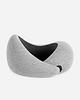
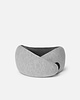
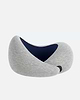
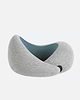





If your head keeps dropping forward or sideways when you fall asleep on a plane, your travel pillow may not be providing support where you need it. Soft padding can feel comfortable around your neck without doing much to keep your head stable.
The shape, height, material, and fit of a pillow all affect how well it supports upright rest. Its position matters, too, especially when you’re working with limited space and an airplane headrest.
This guide explains why head bobbing happens, why some travel pillows fall short, and how to choose and adjust support for the way you sleep.
Key takeaways
- Softness alone doesn’t provide support.
- Chin support helps limit forward nodding, side support helps limit sideways leaning.
- Pillow height and fit are personal and should suit your neck.
- Bulky rear padding can push your head forward.
- Adjustable designs offer more ways to get comfortable.
Why does your head bob when you sleep on a plane?
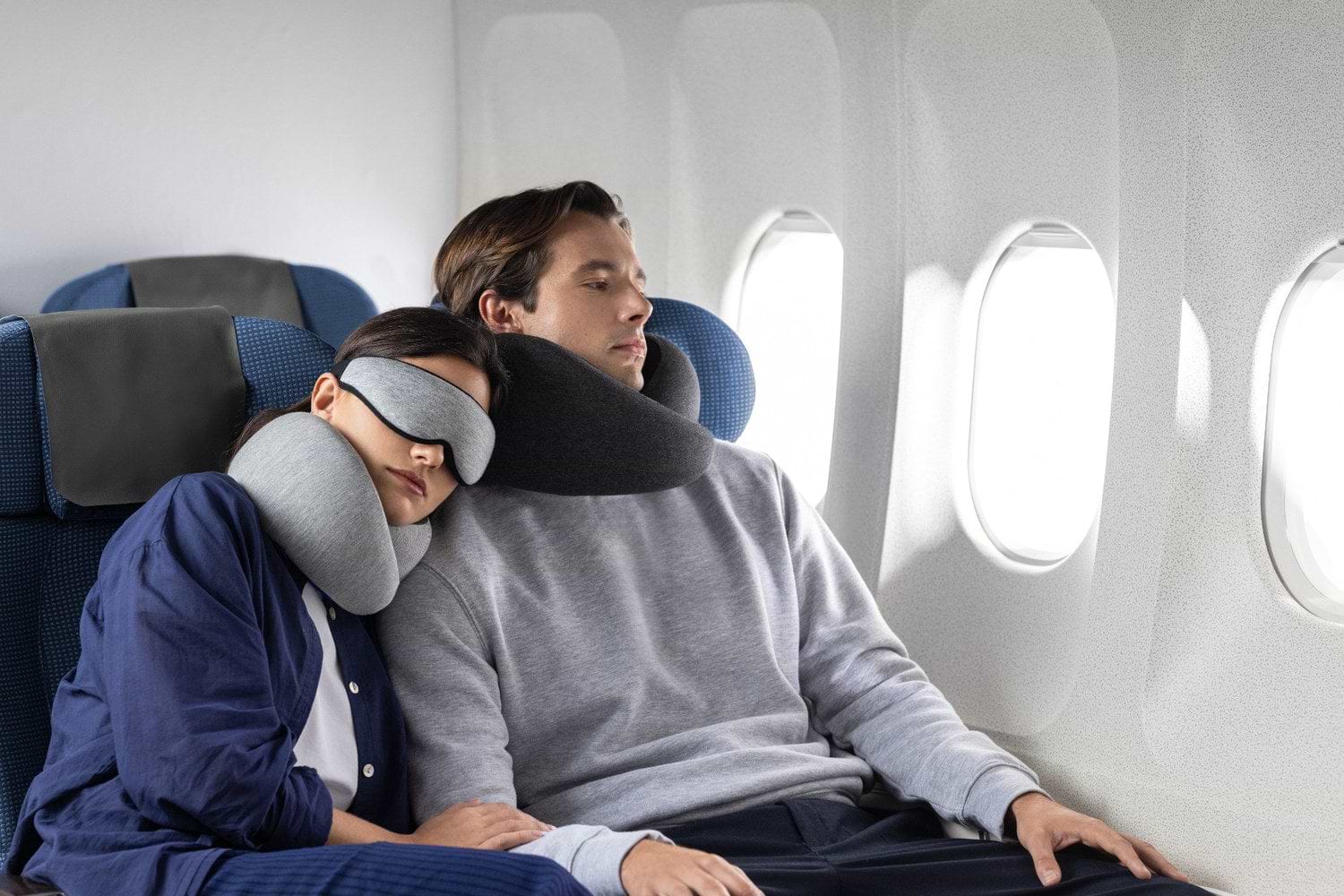
While you’re awake, your neck muscles help keep your head upright. As you fall asleep, those muscles relax. Without enough external support, your head can tip forward, lean toward a shoulder, or move diagonally. That movement can wake you, leading to repeated cycles of nodding off and waking up. Resting with your neck at an awkward angle may also leave you feeling stiff.
A travel pillow can help limit head movement, but it needs to support the direction your head naturally falls. Padding around the back of your neck alone may not be enough.
Why do travel pillows often fail?
A travel pillow’s shape and softness don’t necessarily tell you how well it will support you. Common problems include filling that compresses too easily, an unsuitable height, and gaps between the pillow and your neck.
Cushioning without enough structure
A pillow can feel comfortable against your skin but offer little resistance when your head begins to lean. If the filling compresses too much, your head may continue moving beyond a comfortable position.
Look for material that gives under pressure while maintaining enough structure to support your head. Very soft filling may feel pleasant at first but provide less stability as you relax into it.
Too much padding behind the neck
A thick section behind your neck can push your head forward when it rests against the airplane headrest. This may leave your chin closer to your chest before you’ve fallen asleep.
A lower-profile rear section can work better when the seat already provides support from behind. Check the pillow while leaning against a backrest, rather than judging the fit while sitting unsupported.
Sides that are too low or too soft
If your head tends to lean sideways, the pillow needs enough height to reach the side of your neck and lower jaw. Low sides may cushion your shoulders without supporting your head.
The material also needs to hold up as you lean into it. Side support that flattens too easily can leave your neck tilted at an uncomfortable angle.
An unsupported gap at the front
An open-front design may leave space for your chin to drop. If forward nodding is your main problem, gentle support beneath or beside the lower jaw can help limit that movement.
Front support should work with the sides of the pillow. It should meet your jaw comfortably without forcing your chin upward or pressing against your throat.
A loose or unsuitable fit
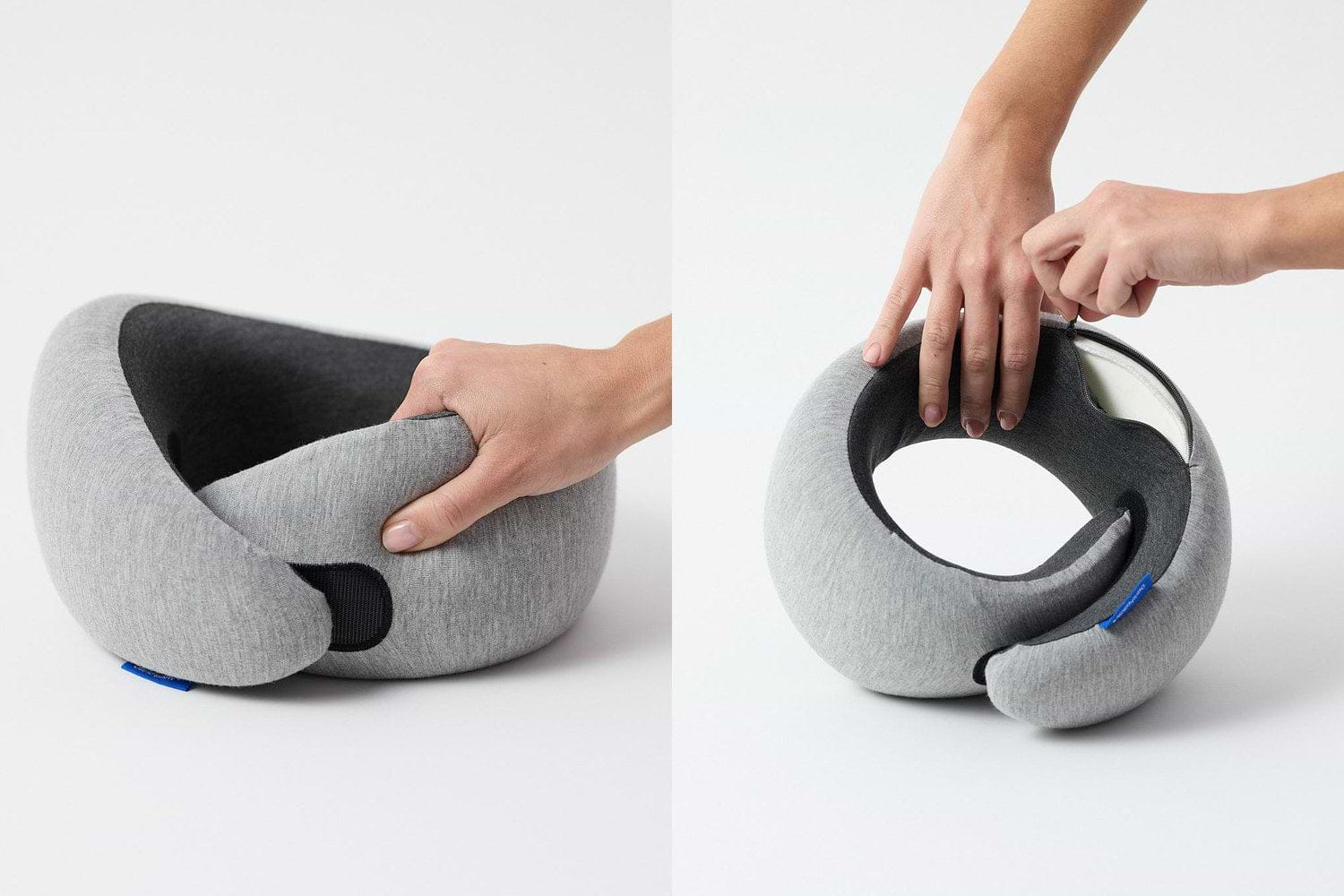
If a pillow sits too loosely, it may slide around or leave a gap your head has to cross before reaching support. An adjustable closure can help bring it closer to your neck and keep it in position.
Height matters as much as circumference. A pillow that is too tall may press into your jaw, while one that is too low may leave your head unsupported. Tightening the closure won’t necessarily solve either problem.
Why chin support matters during upright sleep
When your chin drops toward your chest, your head tips forward with it. Gentle support around the lower jaw can help reduce how far it moves.
If you’re looking for the best travel pillow for chin support, consider the overall fit rather than the size of the front cushion alone. A useful design combines front support with stability at the sides and enough room to rest comfortably against the seat.
Chin support should:
- Meet the lower jaw without pushing it upward.
- Stay in position as you relax.
- Work alongside support at the sides of your neck.
- Allow comfortable breathing, swallowing, and small head movements.
The goal is to give your head a stable resting position while allowing normal movement.
What to look for in a neck pillow for plane sleep
A pillow’s features need to work together. Supportive filling can’t compensate for a poor fit, and an adjustable closure can’t make an unsuitable shape comfortable.
Support from more than one direction
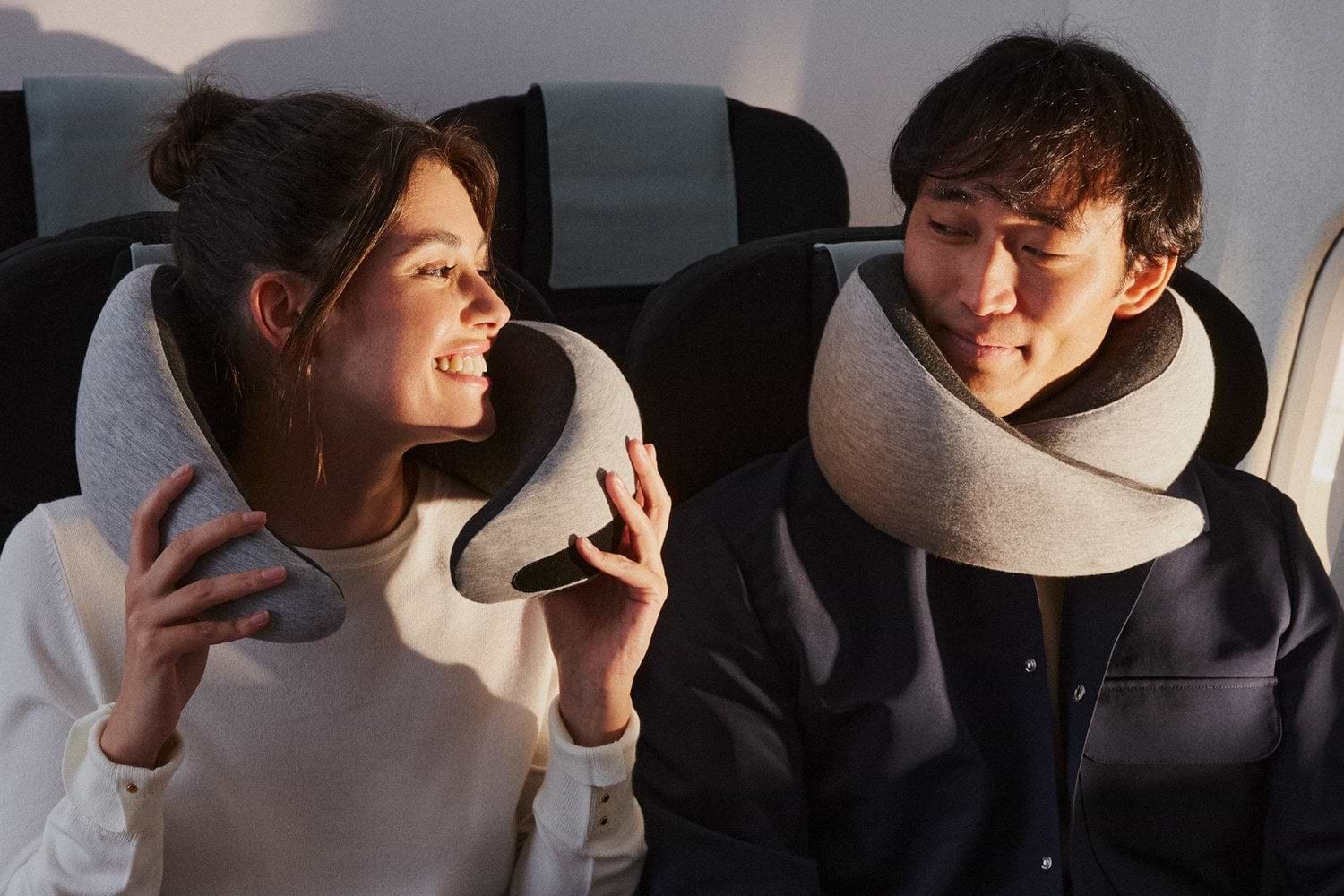
Your head may lean forward, sideways, or diagonally as you sleep. Support around the neck and lower jaw can help accommodate those different positions.
This is often described as 360-degree support. When assessing a pillow, check where it makes contact and whether it supports the direction you tend to lean.
Different support heights can be useful, especially if the design allows you to rotate the pillow to suit your resting position.
Height that suits your neck
Neck length, shoulder shape, and seat design all affect how a pillow fits.
The sides should reach the areas that need support without pressing your jaw upward or making you raise your shoulders. If your head still leans too far before meeting the pillow, the support may be too low.
Look for sizing options, adjustable fastening, or variable support heights that help you find a comfortable position.
A balance of softness and structure
Memory foam can contour around your neck and jaw while providing resistance. Inflatable pillows let you adjust firmness by changing the amount of air.
Either can work, depending on the design and your preferences. Try the pillow while seated against a backrest and let your head settle into it. Notice whether it continues to support you or compresses beyond the point of comfort.
A secure, comfortable fit
An adjustable closure can reduce gaps and help the pillow stay where you place it. Fasten it gradually, checking for pressure around your neck and jaw.
You should be able to breathe, swallow, and make small head movements comfortably. If the pillow only feels supportive when pulled very tight, reconsider its size, shape, or position.
Compatibility with the headrest
Check how the pillow feels when you lean back against the seat. Rear padding shouldn’t push your head forward or prevent you from using the headrest comfortably.
Testing the pillow in an upright chair at home can help identify fit issues before your flight, although the airplane seat may feel different.
How to position a travel pillow on a plane
Adjust your pillow while you’re seated, with your back supported. This gives you a better sense of how it will work with the seat.
- Sit back in the seat. Let the backrest support your torso, and relax your shoulders.
- Place the pillow close to your neck. Check for gaps around the areas where you need support.
- Adjust the closure gradually. Aim for a stable fit without pressure against your throat.
- Notice where your head tends to lean. Close your eyes and relax briefly to see whether your chin dips or your head moves toward one shoulder.
- Reposition the pillow if its design allows it. Follow the product instructions, then place the higher section where it provides comfortable support.
- Use the seat’s features. Recline slightly when permitted, and adjust the headrest wings if available.
- Check the fit again. Let your head settle gently into the pillow. Readjust if it slides, presses into your jaw, or leaves you unsupported.
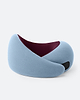
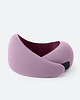
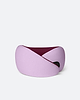
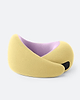
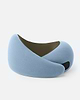
Go Neck Pillow combines an asymmetrical shape, different support heights, an adjustable closure, and responsive memory foam. Its design allows you to rotate it to find a position that suits the way you rest.
Whatever pillow you use, check the fit with your head relaxed and your back against the seat.
Match the support to the way you sleep
The direction your head usually falls can help you identify which features to prioritize.
If your head falls forward
Look for gentle support beneath or beside the chin, a stable front section, and an adjustable fit. Check that the rear padding doesn’t push your head forward.
If the design allows it, try positioning a higher section toward the front. It should meet your lower jaw without forcing your chin upward.
If your head leans to one side
Prioritize enough height and structure to support the side of your neck and lower jaw. A repositionable design can help you place more support on your preferred side.
Adjustable headrest wings may also help. If you lean against the cabin wall, use cushioning and avoid twisting your neck to reach it.
If you change position while sleeping
Look for support in several directions and a fit that stays stable as you move. Different support heights can give you more options as you switch between forward and sideways resting positions.
You may still need to readjust occasionally, particularly if you change your seat recline.
Is memory foam better for plane sleep?
Memory foam can be a useful choice because it contours under pressure while providing structure. How supportive it feels depends on the foam, the pillow’s shape, and how well it fits you.
Some foam may feel too soft for your preferred position, while other foam may feel too firm. It can also feel warm, so consider the cover and your temperature preferences, especially on longer flights.
Portability matters, too. If you have limited bag space, look for a pillow that can be compressed for packing and allowed to recover before use.
Material is one part of the decision. Assess the pillow’s height, fit, and support alongside its filling.
How to make upright rest more comfortable
A pillow can improve your setup, but your seated position and cabin environment also matter.
To make resting more comfortable:
- Keep your back supported and your shoulders relaxed.
- Avoid settling with your torso twisted and your head turned in the opposite direction.
- Use the headrest alongside your pillow.
- Change position occasionally, and move around when it’s safe to do so.
- Readjust if you notice pressure or discomfort.
Light, noise, and cabin temperature can interrupt sleep even when your head is supported. An eye mask, earplugs, and an extra layer may help you settle in.
For overnight travel, our guide to red-eye flights offers more advice on preparing for the journey.
Frequently asked questions
Why does my head keep falling forward on a plane?
Your muscles relax as you fall asleep. If your seat and pillow don’t provide enough support, your head can tip forward. A wide gap at the front of the pillow or bulky padding behind your neck may contribute.
Should a travel pillow support the chin?
If your head tends to fall forward, gentle support beneath or beside the lower jaw can help. It should work with the sides of the pillow without pushing your chin upward or pressing against your throat.
Should you wear a travel pillow backward?
It depends on the design. Some pillows allow you to move the thicker section toward the front for more chin support. Others have a specific intended orientation.
Follow the product instructions, and check how the fit feels while leaning against the seat.
How tight should a travel neck pillow be?
Close enough to feel stable, with room to breathe, swallow, and move comfortably. If it presses against your throat or feels restrictive, loosen it and reassess the fit.
Can a travel pillow completely prevent neck pain?
No pillow can guarantee a flight without discomfort. Your seat, sleeping position, flight length, and existing neck issues can all affect how you feel.
A well-fitted pillow may make resting more comfortable, but persistent or severe pain deserves medical advice.
Finding support that works for you
To reduce head bobbing, start with the direction your head tends to fall. Then check whether your pillow provides enough height and structure in that area, fits comfortably, and works with the seat behind you.
Adjustable fit and support in several directions can give you more ways to get comfortable. Explore our travel pillows to compare designs for your next journey.